Monitoring practice · Field questions, explained
Citizen Science for Groundwater: How to Collect Data People Can Actually Use
Build a useful community project with a clear question, consent, quality checks, consistent records, and honest limits.
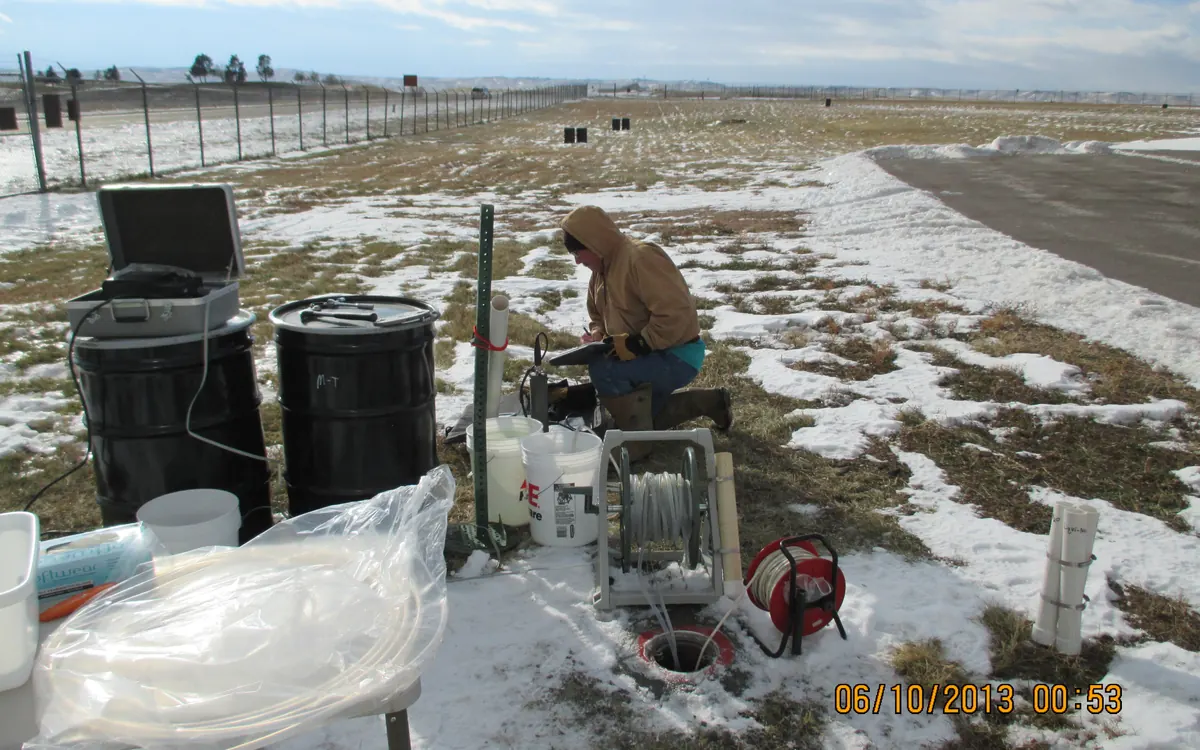
A community groundwater project can begin with a simple concern: residents want to understand the water beneath their homes, farms, or shared landscape. The enthusiasm is valuable, but a pile of measurements does not automatically become a reliable dataset. Results become useful when the project defines its question, documents its methods, checks quality, and explains what the observations are capable of supporting. Those habits are achievable without pretending that volunteers are a regulatory laboratory.
This article follows a hypothetical project from planning to publication. It does not claim that this website has trained volunteers or collected field data. Its purpose is to help organizers ask better questions of laboratories, technical partners, and participating households. Community participation can improve coverage and local understanding. It should complement qualified assessment where water-safety decisions require it, rather than present informal measurements as certificates that drinking water is suitable for every use.
Start with one answerable question
“Is our groundwater healthy?” is an understandable concern but too broad to serve as a sampling specification. A more manageable question might concern seasonal conductivity patterns in a defined set of observation wells, or the distribution of a specified laboratory parameter among participating domestic wells. The narrower wording identifies the population, measurement, and intended comparison.
Write down how the answer will be used. A public-awareness exercise, a research study, and a household water-use decision have different evidence requirements. If the project cannot support a proposed decision, change the design or narrow the claim. Include local technical partners early enough to influence the plan. A short project charter should identify the question, geographic scope, participants, responsible lead, intended outputs, and limitations. This prevents the final communication from expanding beyond the evidence simply because a larger claim would attract more attention. Clear purpose is the foundation of both useful data and trustworthy community relationships.
Plan quality before buying equipment
The EPA participatory-science quality-assurance handbook and toolkit emphasizes planning and documentation appropriate to a project's intended use. A quality plan is not paperwork added after sampling. It connects the question to the methods, checks, responsibilities, and acceptance criteria that make interpretation possible.
Decide who approves procedures, who trains participants, who checks equipment, who receives laboratory reports, and who reviews the dataset. Specify how a problem will be recorded and what happens to affected results. The plan should be realistic for the project's resources. If the team cannot maintain a complicated method consistently, a narrower and better-supported design may be preferable. Do not choose a kit because it is inexpensive and only later ask which question it can answer. Equipment serves the study design; it should not silently define the project's claims or encourage measurements that cannot be interpreted reliably.
Participation does not automatically create a representative sample
Volunteers are often recruited through existing networks. That can produce excellent engagement while leaving gaps in geography, well type, income, language, or access. A dataset from willing participants should not automatically be described as representative of every household in the region. The recruitment method is part of the evidence.
Record how sites were selected and which areas or groups are missing. Where appropriate, seek technical advice on a sampling design that matches the population of interest. If the project remains a convenience sample, state that plainly and avoid turning the percentage of participating wells with a result into a regional prevalence estimate. A map of untested areas should show them as untested, not as low concern. Participation itself is still useful: it can reveal information needs, support local learning, and identify questions for a more systematic follow-up. Honesty about selection makes those contributions more credible rather than diminishing them.
Safety and permission come before access
Groundwater monitoring can involve private property, electrical equipment, contaminated areas, traffic, open water, or unfamiliar well structures. Volunteers should not open wells, alter equipment, enter confined spaces, or improvise access because a sample would improve the map. The project needs explicit permissions, a safety plan appropriate to the tasks, and qualified support for activities outside participants' competence.
Explain what participation involves before requesting consent. Identify what data will be collected, who can see them, how results will be returned, and whether locations may be published. Give participants a way to ask questions and withdraw according to the agreed policy. If the study could reveal a household water-quality concern, establish a referral pathway before sampling begins. Volunteers should not be left to deliver unsupported health interpretations. A respectful project treats people as partners with rights and practical needs, rather than as convenient access points for a dataset.
Make field records consistent and durable
A useful field sheet identifies the site, date, time, collector, measurement or sample point, equipment, method, and relevant observations. The exact fields depend on the project. Use stable site identifiers and keep personal contact information in a separate, protected record. Agree on date formats and units before data entry begins.
Keep original observations, including corrections and unusual conditions. If a reading is repeated because of a suspected error, retain the reason rather than deleting the first value without explanation. Photographing a meter display may help documentation where safe and permitted, but it does not replace the context needed to interpret the reading. Plan how records will be backed up and how paper notes will be transcribed. A second-person check can catch shifted decimal points, transposed identifiers, and unit errors. These small procedural choices often improve the dataset more than purchasing a more elaborate instrument without the capacity to manage it consistently.
Blanks and duplicates answer different questions
Quality-control samples should be selected with a qualified laboratory or technical adviser. A blank can help examine contamination introduced through a relevant part of the process. A duplicate can help assess reproducibility under the defined collection and analysis conditions. Neither is a magical guarantee that every result in the project is correct.
The quality plan should state why each check is used, how often it is collected, how it is labeled, and what criteria trigger investigation. Participants should understand the purpose sufficiently to follow the procedure consistently. If a quality check raises a concern, investigate the affected batch or process before publishing a confident conclusion. Do not hide the check because it makes the chart less tidy. A documented limitation can be extremely informative: it may identify a handling problem that can be corrected in the next round and prevent a false environmental story from being built around an avoidable procedural error.
Keep screening separate from laboratory confirmation
Field kits and meters can be useful for specified screening purposes, subject to their limitations. Their results should not be relabeled as certified laboratory measurements. Color interpretation, instrument range, calibration, sample handling, and environmental conditions can affect what a screening result means. The project should define when a result warrants professional review or confirmatory analysis.
Use separate labels in the dataset and public output for screening observations and laboratory results. Preserve the method and reporting limit where relevant. If a participant asks whether water is safe, direct the question through the prearranged qualified pathway rather than answering from a volunteer chart alone. A well-designed community program can make this distinction understandable without discouraging participation. Participants are contributing observations and local knowledge. The value of that contribution depends on respecting the boundary between what the chosen method can show and the larger decisions that require additional evidence or authority.
Publish a map that respects privacy and uncertainty
A public map can help explain patterns, but exact coordinates may reveal household identities or sensitive infrastructure. Obtain appropriate consent and consider aggregated or generalized locations when those meet the communication purpose. Keep a secure internal record if precise locations are needed for analysis. Do not imply more spatial precision than the methods support.
Explain the sampling dates, selection process, methods, missing data, and quality checks beside the map. Distinguish a measured point from an interpolated area and an unsampled area. Provide a route for reporting errors without exposing personal information. If results are corrected, preserve an update note explaining what changed and why. A public dataset should include enough documentation for another analyst to understand its limits. Attractive visualization is useful, but a beautiful map with hidden sampling bias or missing method information can spread misunderstanding faster than a simple table that tells the truth.
Return results and improve the next round
Participants should hear about their own results through the agreed process before encountering them in a public presentation. Provide the complete report where appropriate, an explanation of the project's scope, and contact details for qualified interpretation. Avoid ranking households or attaching stigmatizing labels to places. A result describes a sample and its context, not the worth or care of the people who live there.
After publication, review what worked and what failed. Were records complete? Did quality checks reveal a recurring problem? Were important areas excluded? Did the project answer its original question, or does a new design now make more sense? Document the review so future organizers can build on it. Community monitoring succeeds when it creates a durable link between local concerns and credible evidence. Its greatest contribution may be a better question, a more inclusive network, or a clearer path to professional follow-up, rather than a dramatic claim that the available measurements cannot sustain.
Budget time for explanation as well as collection. Participants may need help understanding why a missing value cannot simply be filled from a neighboring site or why a surprising observation needs checking before publicity. A short results meeting can walk through a real record from field sheet to final table, with personal details removed. Showing the evidence trail makes quality assurance tangible and gives volunteers a clearer understanding of how careful documentation turns their work into information another person can evaluate.
Methodology, sources, and limitations
Method: Desk-based explanation using the primary sources below, checked on November 14, 2026. Examples and workflows are hypothetical unless explicitly attributed. No original field campaign, laboratory analysis, interviews, or independent expert review are claimed.
Scope: Build a useful community project with a clear question, consent, quality checks, consistent records, and honest limits. Findings apply only within each source’s stated setting, methods, and date. This guide does not certify a supply, diagnose exposure, or replace a qualified local assessment.
Read our editorial standards and correction and contact status. Review date: .