Emerging contaminants · Field questions, explained
Microplastics in Groundwater: What a Detection Proves—and What It Does Not
Read particle definitions, contamination controls, identification methods, and the 2026 policy discussion without confusing detection with risk.
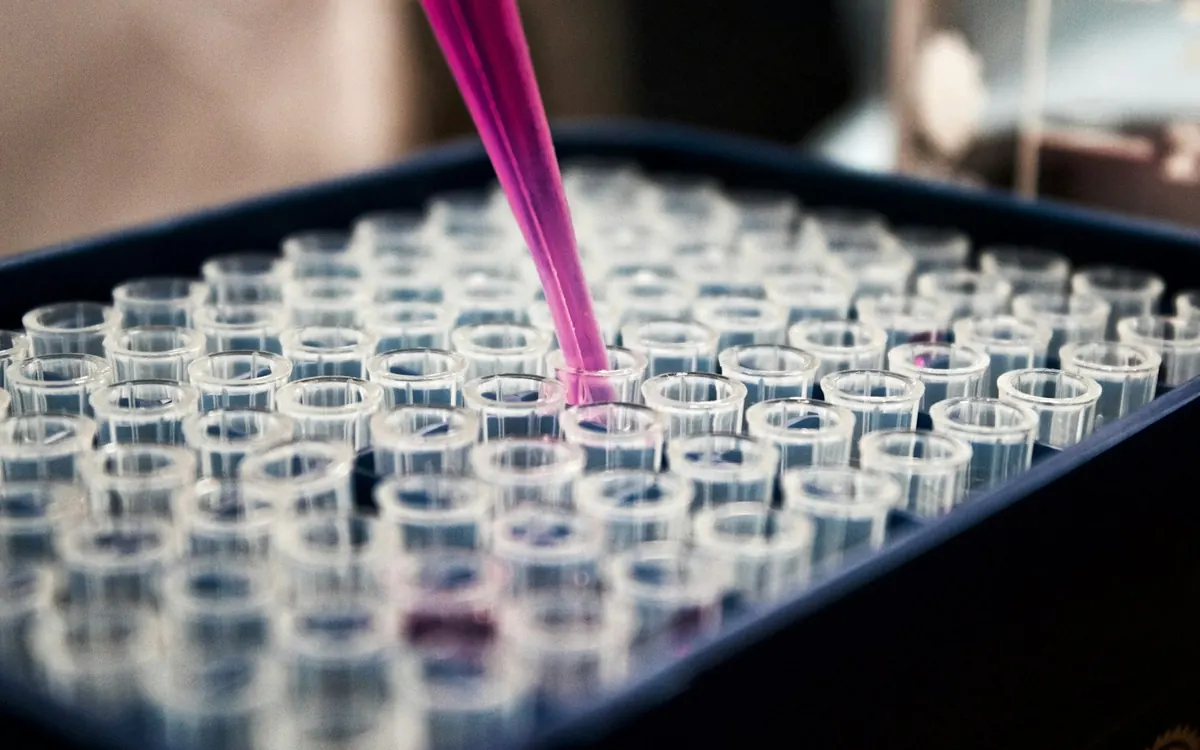
Microplastics attract attention because they connect familiar objects with a largely invisible water environment. A photograph of plastic waste can make the issue feel immediate, but it does not show what a groundwater sample contains. A laboratory detection, in turn, does not automatically establish the source of the particles or the health implications of a particular exposure. Good reporting keeps those steps separate while taking the research seriously.
This guide examines how to read a microplastics study and identify the questions that remain open. It is an editorial review, not an original sampling campaign or an individual health assessment. The central task is to understand what was counted, how it was identified, how contamination was controlled, and which conclusions the evidence supports. Those questions are especially important when a fast-moving headline compresses a complicated analytical method into a sentence about “plastic in water.”
Define the particles before comparing the numbers
The word microplastics can cover a range of particle sizes, shapes, and polymer types. An analytical method may detect only part of that range. Two studies can therefore report different particle counts without necessarily disagreeing about the same water conditions. They may simply be measuring different windows of the particle population.
Read the operational definition in the methods. Record the size range, any lower detection boundary, the types of particles included, and the unit used for reporting. A count per litre, a mass concentration, and a percentage of identified particles are different quantities. Do not place them on one chart as though they shared a common scale. If nanoplastics are discussed, check whether they were actually measured or merely mentioned as a related research question. A precise definition may make a headline less sweeping, but it gives the reader the information needed to compare findings without manufacturing a contradiction or a trend.
Groundwater samples need clear source context
A sample described as drinking water may come from raw groundwater, treated water, a distribution network, or packaged water. Those stages can involve different materials and handling conditions. A study of bottled water cannot automatically establish the particle content of the aquifer from which some water originated. Likewise, a raw-water sample does not describe every subsequent stage of delivery.
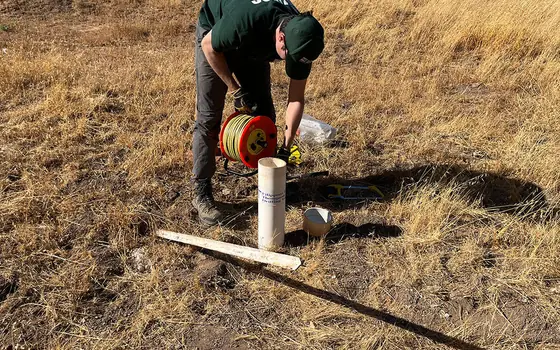
Look for the sample point, well construction information where relevant, treatment status, and collection procedure. Ask whether the study was designed to investigate groundwater occurrence or a later part of the supply chain. If the source pathway is uncertain, keep that uncertainty in the interpretation. A useful comparison follows comparable water through clearly identified stages, with methods capable of addressing the question. A vague label such as “natural water” is not enough to distinguish environmental occurrence from material introduced during collection, storage, processing, or delivery.
Contamination control is part of the result
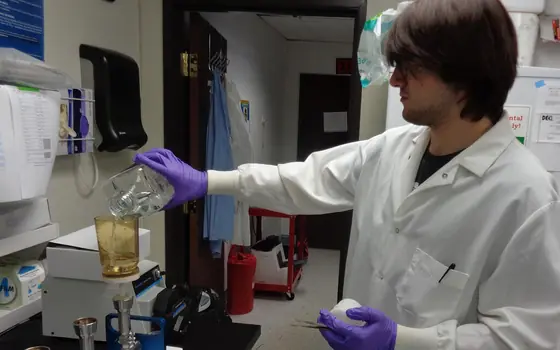
Particles can be introduced through equipment, containers, clothing, air, or laboratory handling. That possibility does not mean every reported detection is an artifact. It means the study needs controls capable of examining relevant contamination pathways. Blanks and careful procedural documentation help readers evaluate whether a result can be distinguished from background introduced by the process.
Ask which blanks were used and how their results affected the final interpretation. Were sample-processing steps described? Were materials selected with the analytical question in mind? Did the authors explain how uncertain particles were handled? A paper should not be judged solely by a dramatic count while its contamination controls are ignored. Conversely, one imperfect control does not justify dismissing an entire research field. The appropriate response is specific: identify which part of the result remains uncertain, whether the uncertainty changes the conclusion, and what a stronger follow-up design would need to establish.
Visual identification is not the same as chemical identification
A small fragment that looks like plastic under magnification is not automatically confirmed as a particular polymer. Studies may use different identification techniques, and some analyze only a subset of the particles initially counted. The distinction between suspected and confirmed particles should remain visible in the report.
Read how particles were classified and how many underwent the stated confirmation process. If a subset was analyzed, ask how it was selected and how the authors extrapolated from it. Look for uncertainty in classification and any excluded categories. A public summary should not silently convert “suspected particles” into “confirmed plastic” or extend identification of a subset to every object without explaining the method. This is a general evidence-reading principle: the final noun should match the analytical procedure. Careful wording allows readers to recognize genuine findings while understanding the confidence attached to a particle's identity.
Detection and health interpretation answer different questions
Finding particles establishes an occurrence observation under the study's methods. Assessing health implications requires additional evidence about exposure, particle characteristics, dose, biological interactions, and the quality of the underlying studies. It is not sound to infer a personal diagnosis from a detection count, nor to claim that an unresolved question proves there is no reason for further research.
The WHO's 2019 report on microplastics in drinking water is an important historical assessment of the evidence and knowledge gaps available at that time. It should not be presented as a complete evaluation of every later study. When discussing newer findings, identify their design and limits separately. A laboratory experiment, an occurrence survey, and a population study contribute different kinds of information. Keeping those distinctions visible prevents a single striking finding from being stretched into a universal conclusion about all groundwater or every person's health.
What the 2026 regulatory discussion does and does not mean
The EPA's draft Sixth Contaminant Candidate List, announced in April 2026, includes microplastics as a group. A candidate-list process identifies matters for research and regulatory consideration. Inclusion on a draft list is not itself an enforceable concentration limit for every water supply. Readers should check the current official status before describing a proposal as a final requirement.
This distinction matters because regulatory language is often shortened in headlines. “Under consideration” can become “banned,” or “priority for study” can become “confirmed at dangerous levels.” Neither change is justified by the listing alone. For an actual compliance question, consult the responsible authority and the current rule applicable to the jurisdiction and supply. For a research question, read the methods and evidence. Policy attention can be a reason to improve monitoring and understanding without supplying a numerical interpretation that the underlying process has not established.
Do not turn unlike studies into a trend
Suppose one hypothetical study counts particles above one size threshold and another later study counts substantially smaller particles as well. A higher later count may reflect the expanded analytical window rather than a worsening environment. Changes in sample volume, extraction, identification, and blank correction can have similar implications. A time trend requires a comparable measurement framework.
Build a study-comparison table before drawing conclusions. Include sample type, location, date, size range, unit, identification method, contamination controls, and stated limitations. Mark differences that prevent direct numerical comparison. Where harmonization is impossible, summarize the studies qualitatively rather than forcing them into a single rising line. This approach is less sensational but more useful. It shows where evidence is accumulating, where analytical development is changing what can be observed, and where a repeated, standardized monitoring design would be necessary to establish environmental change rather than an improvement in detection.
Treatment claims require particle-specific evidence
Concern about microplastics can quickly become a market for household devices. A general claim that a filter removes particles is not enough to characterize its performance across the size range and operating conditions relevant to a particular concern. Ask what independent testing applies to the exact product, what was measured, and whether the claim concerns count, mass, or another endpoint.
Consider maintenance, installation, service life, and the possibility that a system's performance changes with use. Do not assume that visible clarity demonstrates removal of all particles or other contaminants. A product evaluation should remain separate from the broader question of environmental occurrence. Local water professionals can help identify whether a proposed intervention addresses the actual supply and evidence available. This article does not recommend a product or guarantee a reduction. Its purpose is to help readers recognize when an advertisement supplies a testable performance statement and when it merely repeats a concern without demonstrating a solution.
Before sharing a graph, check whether its caption preserves the same distinctions as the paper. A technically accurate axis can still mislead if a title implies that all particle sizes or all water sources were assessed.
A better headline leaves room for the methods
Responsible reporting can be engaging without promising certainty. State which water was sampled, what particles the method could identify, and whether the study addresses occurrence, exposure, or health effects. Use a representative image with a caption that does not imply the pictured water was tested. Link to the original work and explain the most important limitation near the main finding rather than burying it at the end.
For readers, the practical habit is to ask what observation would change the conclusion. Better contamination controls, repeated sampling, broader size coverage, or a more relevant exposure study may each answer a different gap. Microplastics research is a developing evidence field, and attention can help improve it. The strongest public conversation recognizes both the importance of the question and the boundaries of current measurements. That combination supports useful research and sound decisions without turning uncertainty into either a frightening certainty or a reason to stop asking questions.
When saving a study for later comparison, retain its supplementary methods and any correction notice. Important details about processing, particle classification, or blank handling may be outside the abstract. A citation alone is not enough if the interpretation depends on an assumption that the paper did not make. Keep a short evidence note recording the specific finding used and the main limitation. That habit makes future updates easier when analytical methods develop or the authors publish a clarification.
Methodology, sources, and limitations
Method: Desk-based explanation using the primary sources below, checked on November 14, 2026. Examples and workflows are hypothetical unless explicitly attributed. No original field campaign, laboratory analysis, interviews, or independent expert review are claimed.
Scope: Read particle definitions, contamination controls, identification methods, and the 2026 policy discussion without confusing detection with risk. Findings apply only within each source’s stated setting, methods, and date. This guide does not certify a supply, diagnose exposure, or replace a qualified local assessment.
Read our editorial standards and correction and contact status. Review date: .