Water management · Field questions, explained
Can We Refill Aquifers Safely? The Water-Quality Questions Recharge Must Answer
Recharge is more than underground storage: source variability, aquifer reactions, pilots, monitoring, and accountable operations matter.
Putting water back underground sounds like an intuitive response to groundwater depletion. The appeal is clear: use available water when it can be captured, store some of it below the surface, and recover it when demand is greater. The difficulty is that an aquifer is not an empty tank with chemically inert walls. Water entering the subsurface interacts with the receiving environment, and a successful quantity project still needs a defensible water-quality plan.
This guide explores managed aquifer recharge through a hypothetical project-review workflow. It is not an engineering design, a permit application, or a claim that this website has operated a recharge facility. The aim is to identify the evidence a project needs before it can credibly promise benefits. Recharge can be an important planning option, but its suitability depends on source water, site conditions, intended use, regulation, monitoring, and the ability to respond when assumptions prove wrong.
Define the project before debating the technology
Managed aquifer recharge is a broad category. A proposal may involve infiltration from a surface facility, injection through a well, seasonal storage, or another arrangement suited to a particular setting. The source might be stormwater, surface water, or appropriately treated reclaimed water. These differences affect both the engineering and the water-quality questions.
Write a plain-language project description identifying the source, recharge method, receiving aquifer, intended recovery or environmental benefit, and responsible operator. State which parts are proposed and which already exist. Avoid using a familiar project elsewhere as proof that the local design will work. A clear description helps residents and reviewers ask relevant questions instead of arguing over a label. It also reveals missing assumptions early: if nobody can identify the water source or the receiving interval, a claim about quality protection is premature. The project should be specific enough that its promised benefits and possible effects can be evaluated.
Source-water characterization comes first
The quality of water available for recharge may vary with season, weather, treatment performance, or changes in the contributing catchment. One favorable sample cannot characterize that entire range. A source assessment should be designed around the actual variability and the intended operation, with qualified technical input and the applicable regulatory requirements.
Identify which parameters matter for the source and receiving environment, how they will be measured, and what would make the water unsuitable for the proposed operation. Document analytical methods, reporting limits, and quality checks. If the source is treated water, retain information about the treatment process and its performance rather than treating the word “treated” as a complete specification. The source-water dataset should support operational decisions, not merely decorate a feasibility report. It must be clear what happens when a measurement is missing, a treatment condition changes, or a result falls outside the project's approved operating envelope.
The receiving aquifer has its own chemistry
Recharge water can differ from native groundwater in composition and chemical conditions. Interactions with aquifer materials may change water quality during storage and movement. The EPA's overview of aquifer recharge and aquifer storage and recovery notes concerns including the potential mobilization of metals and radionuclides through interactions between recharge water and aquifer materials. This is a reason for site-specific assessment, not proof that every recharge project has the same outcome.
A conceptual model should describe the receiving materials, native groundwater, relevant chemical processes, and potential pathways to other users or environmental receptors. Supporting investigations may include specialist testing and modeling appropriate to the project. State which conclusions are measured, which are modeled, and which remain hypotheses. The underground environment can provide useful processes, but it should not be described as a universal filter that removes every contaminant without creating any new concern.
Quantity and quality need linked accounting
A project can report a large volume recharged while leaving the quality and recoverability of that water unclear. Volume is important, but it is only one part of performance. Distinguish water delivered to the facility, water actually entering the aquifer, water recovered, and water meeting the quality conditions required for its intended use. These quantities should not be exchanged in public communication.
Create an accounting framework with clear definitions and uncertainty. If estimates rely on models, identify their assumptions. If water mixes with native groundwater, explain how the project evaluates recovery and quality without implying that every recovered litre is chemically identical to the original recharge water. A combined performance report should show both operational volumes and the monitoring evidence relevant to water quality. This makes it possible to recognize a project that stores water effectively while still needing corrective work on treatment or operations, rather than declaring success solely because the largest number is impressive.
A pilot should test consequential assumptions
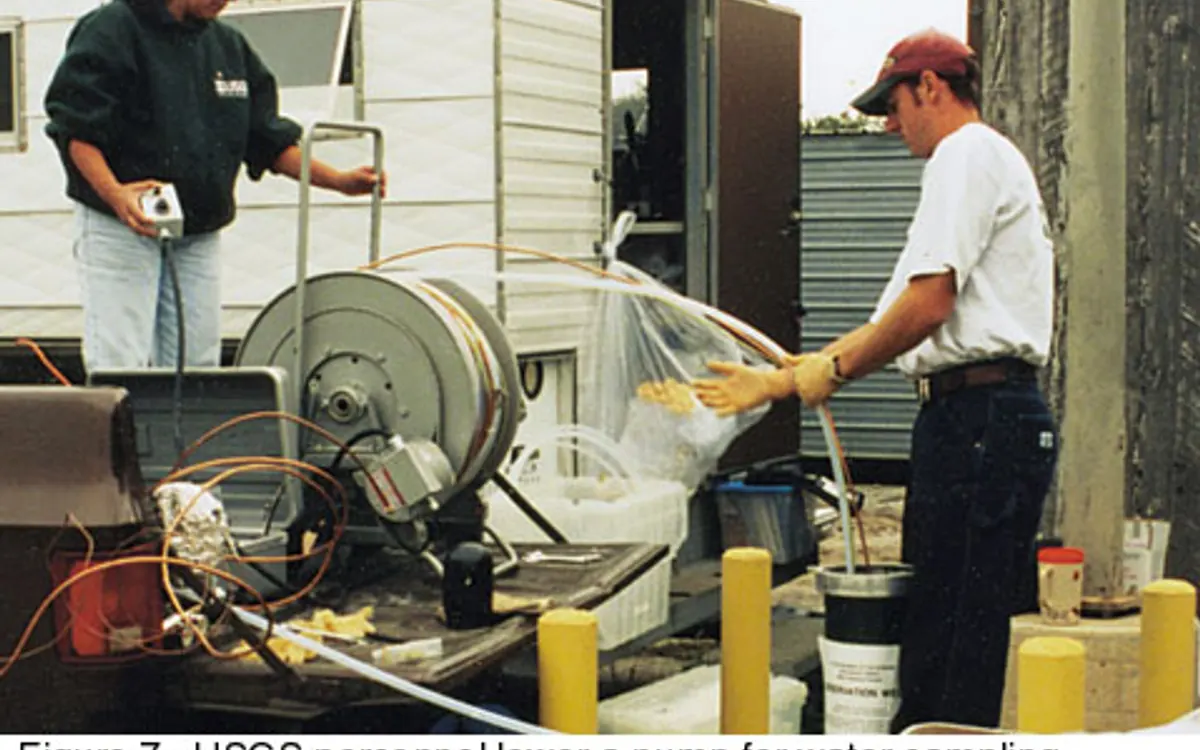
A pilot is most useful when it is designed to examine uncertainties that matter to the full project. It should not simply demonstrate that water can enter the ground. Relevant questions may concern source variability, hydraulic response, chemical interactions, treatment reliability, monitoring sensitivity, and recovery behavior. The actual design requires qualified engineers, hydrogeologists, and other specialists as appropriate.
Before a pilot begins, define the hypotheses, monitoring locations, baseline period, decision criteria, and stopping or review conditions. Specify how results will affect the next stage. If the pilot is too small or short to address a long-term concern, acknowledge that limitation. A favorable pilot result should not be stretched into a guarantee for every future operating condition. Document unexpected observations as findings rather than inconveniences. A well-run pilot can justify a revision, a narrower operating envelope, or even a decision not to proceed, each of which can be a valuable outcome when it prevents a larger unsupported commitment.
Monitoring wells must answer a pathway question
Placing a few wells around a facility does not automatically create an effective early-warning system. Their locations, depths, screened intervals, sampling frequency, and analytical parameters need to reflect the conceptual model and intended decisions. A monitoring network should be capable of detecting relevant changes where they matter, with enough baseline information to interpret them.
Explain which wells characterize background conditions, which track the recharge zone, and which serve other defined purposes. Maintain construction records and consistent identifiers. If the conceptual model changes, review whether the network still fits. Data management should preserve original results, qualifiers, laboratory methods, and operational context. A change in chemistry may coincide with a source-water change, pumping event, or maintenance issue; records make those possibilities testable. Monitoring is not simply a reporting obligation. It is the mechanism that connects an evolving underground system with decisions that can keep operations within the project's approved and evidence-supported limits.
Reuse requires barriers that are actually verified
When reclaimed water is proposed as a source, public discussion often swings between unconditional enthusiasm and rejection based on origin alone. A meaningful assessment examines the treatment train, source controls, monitoring, intended use, and applicable rules. The label “recycled” does not establish performance, just as the label “natural” does not establish suitability.
Ask how each required barrier is verified and what response follows a failure. Separate treatment performance at the facility from water quality after subsurface storage and from quality at the final point of use. Those stages require connected evidence. The EPA enhanced aquifer recharge research program illustrates the continuing research interest in recharge performance and water-quality questions. A project should explain which evidence is directly applicable to its design rather than invoking research activity as an endorsement. Public confidence is better served by a transparent operating framework than by a promise that underground passage solves every concern automatically.
Governance determines whether the plan works in practice
A technical design needs responsible institutions, funding, maintenance, and authority to act. Identify who owns the facility, who operates it, who reviews data, who can stop recharge, and who informs affected users. Clarify how permits and local requirements apply. A monitoring trigger is not useful if nobody has the responsibility or resources to respond.
Include the cost of routine analysis, equipment upkeep, data review, and corrective work in the project discussion. Explain how long-term records will remain available if contractors change. Provide a process for complaints and data corrections without promising that every concern can be resolved by a website form. Communities should be able to see how decisions are made and which organization is accountable. Governance is part of water-quality protection because the best technical warning has little practical value if it is ignored, lost between organizations, or reported only after the opportunity for a timely response has passed.
Judge the proposal by its evidence trail
A credible recharge proposal connects a defined source to a characterized aquifer, a justified treatment and operating plan, a purposeful monitoring network, and explicit review conditions. Its public summary should make those connections understandable. It should also state what remains uncertain and how additional work will reduce that uncertainty before the next decision.
When reading a claim that recharge will solve a region's water shortage, ask which part of the problem the project actually addresses and under which conditions. Consider quality, quantity, timing, costs, environmental effects, and other users. Avoid treating one successful project as a universal template. Managed recharge can deserve serious consideration without being presented as effortless underground storage. The most persuasive case is one that shows its assumptions, tests its consequential uncertainties, reports results honestly, and remains capable of changing course. That is how an appealing idea becomes a reviewable water-management option rather than a promise that the aquifer itself is expected to make true.
Public reporting should identify unavailable data as unavailable. A missed sample or equipment failure should not become an assumed compliant observation in a performance summary. Explain the consequence for interpretation and the corrective step taken. This approach gives readers a realistic view of operational reliability and shows that the project can respond to imperfect conditions. It also creates a more useful record for future reviews than a dashboard that appears complete only because gaps were quietly removed.
Methodology, sources, and limitations
Method: Desk-based explanation using the primary sources below, checked on November 14, 2026. Examples and workflows are hypothetical unless explicitly attributed. No original field campaign, laboratory analysis, interviews, or independent expert review are claimed.
Scope: Recharge is more than underground storage: source variability, aquifer reactions, pilots, monitoring, and accountable operations matter. Findings apply only within each source’s stated setting, methods, and date. This guide does not certify a supply, diagnose exposure, or replace a qualified local assessment.
Read our editorial standards and correction and contact status. Review date: .